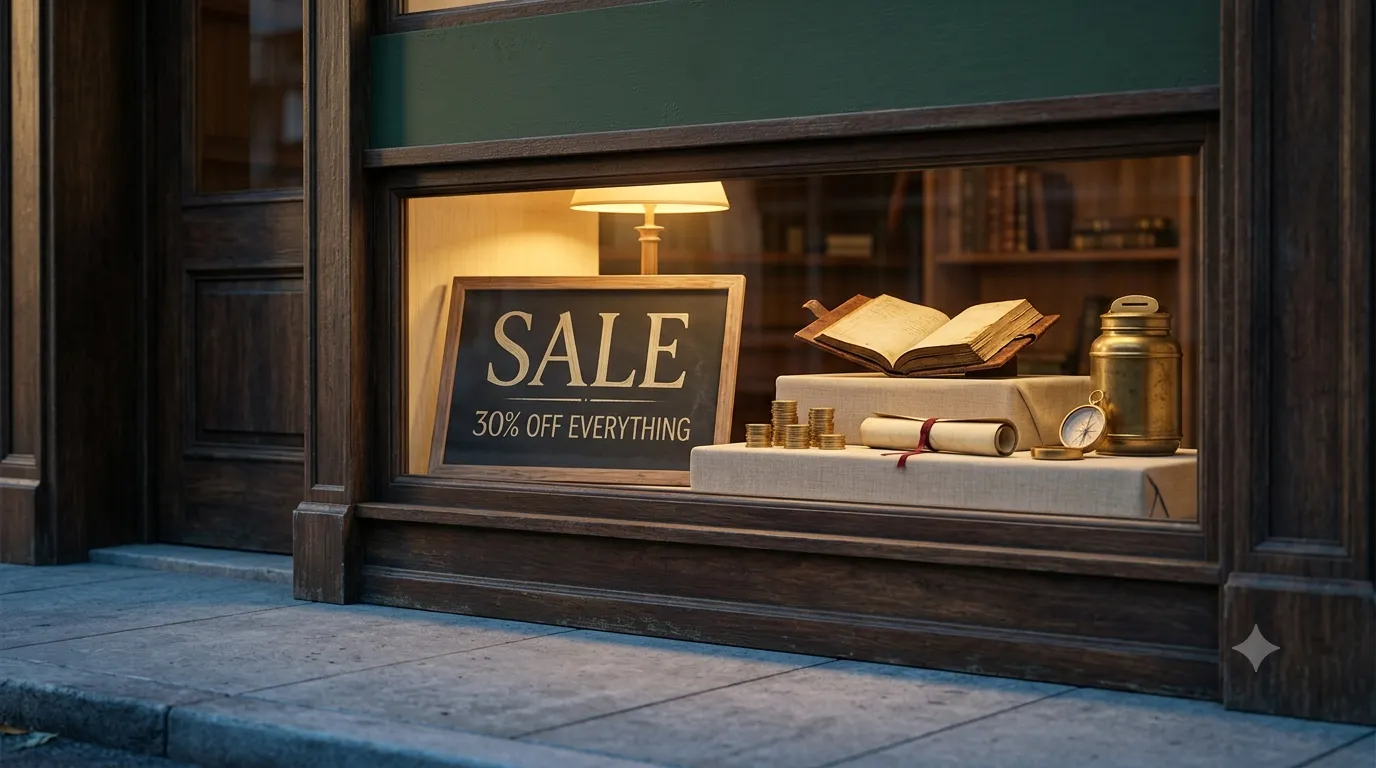
The scariest headline of your investing life is actually a bargain.
When the market falls 30%, the news calls it a crisis. Your portfolio turns red. Every instinct in your body screams sell. And if you’re 25, those instincts are exactly backwards. For you, a crash isn’t the disaster. It’s the opportunity you’ll wish you’d had more of.
The arithmetic of an investing lifetime
A typical investor puts money to work for about 30 years. Say from 25 or 30 until 55 or 60. Over a stretch that long, history is clear: you will live through at least two, and probably three, catastrophic crashes. The kind that last a year or more and spawn headlines about the end of finance.
That fact is enough to scare a lot of people out of investing entirely, and the fear is reasonable. Watching a third of your savings evaporate feels like the floor giving way.
But across those same 30 years, you’ll also live through 26 to 28 years of rising markets. The crashes are real, but they’re the exception. We just don’t feel it that way, because fear shouts and compounding whispers. We replay 2008 and 2020 on a loop. We forget the dozens of ordinary good years that did the actual work of building the wealth.
You’re a buyer for the next 40 years
If you’re young, you are going to be buying investments. With every paycheck. For decades. That makes you a net buyer, not a seller. And buyers want low prices.
If groceries go on sale, do you panic and run out of the store? Of course not. You stock up. A market crash is your single favorite store marking everything down 30%. Except your instinct is to flee. The only people who should fear a crash are those who need to sell soon. At 25, that isn’t you.
Warren Buffett put it best: “Be fearful when others are greedy, and greedy when others are fearful.” The fearful moments (2008, 2020) are precisely when the people with time, cash, and nerve quietly got rich.
The catch (this matters)
This only works if a few things are true.
- You don’t panic-sell. A crash only helps the buyer who keeps buying. Selling at the bottom turns a paper dip into a permanent loss.
- You keep your income so you can keep buying. That’s why an emergency fund matters. It stops a crash from forcing you to sell at the worst time.
- You’re diversified. “The market recovers” is true of a broad index. It is not guaranteed of any single stock, which can go to zero and stay there.
- No leverage. Borrowed money turns a survivable crash into a wipeout. Don’t.
A fair caveat: recovery isn’t guaranteed on your timeline. Ask Japan. Time tilts the odds in your favor. It doesn’t hand you a certainty. But with decades ahead, a diversified, unleveraged young investor who keeps buying through the fear has history firmly on their side.
I know this, because it built my portfolio
I’m not theorizing. Most of the capital I have today, I made during the 2008 crisis and the years right after it.
I owned some solid businesses going in. As the market fell apart, I kept buying them. Lower and lower, as the prices dropped. It did not feel smart. It felt like catching falling knives while the world ended.
Then 2009 and 2010 arrived. The tide turned. The shares I’d bought in the depths, the cheap and terrifying ones, did the heaviest lifting. The crash didn’t set me back. It made me.
That’s the part no one tells a frightened 25-year-old: the downturn you’re terrified of is the one most likely to make you wealthy. If you have time on your side, you own things worth holding, and you don’t flinch.
What investing actually asks of you
Investing isn’t really about being clever. It’s about temperament. The math is on your side. Your own nervous system is the obstacle.
Here’s the truth that fear hides. If you’re diversified, unleveraged, and patient, you will not lose everything. What feels like the floor falling away is, from 40 years out, a sale. And a test of nerve. Pass it. Stay in. Keep buying. Don’t flinch. Those 2 or 3 brutal years become the price of admission to the 26 or 28 good ones.
So when the next crash comes, try to feel the thing almost no one feels. Not panic. A flicker of something like excitement. The store just opened a sale. You’ve got decades to shop. And the fearful are handing you their shares.
Have you lived through a market drop yet, and did you buy, hold, or sell? I’d love to hear how it felt in real time. Comments are open.
Seek Value Now is published for educational and informational purposes only and is not investment advice. Markets carry risk, including loss of principal. Do your own research. HG